 Christina
On this page
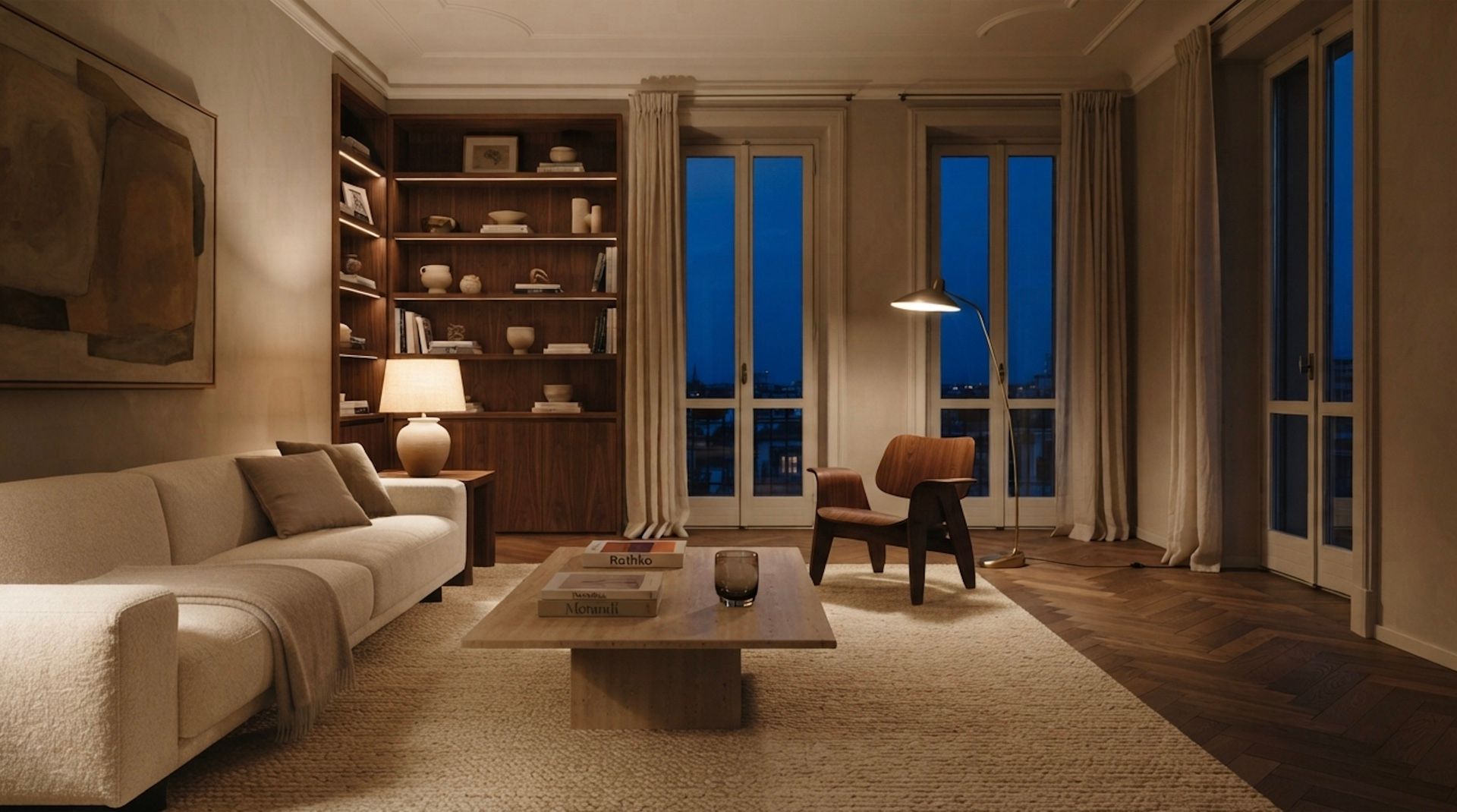
You know that feeling when you walk into a really nice hotel room? Before you’ve even looked at the bed or the view, you just go «ohhh, this is nice.» It happens in a few seconds, and it’s got very little to do with money.
Here’s the funny thing: «expensive» almost never comes from expensive stuff. One of the most common renovation mistakes is spending the whole budget on things and almost nothing on how the room actually feels.
Think about places that felt luxurious to you. The little hotel that went quiet and cosy the second the door shut. The restaurant where the lighting made everyone look relaxed and glowing. None of that was about anything fancy. It was light and air doing exactly what you needed, without you having to ask.
Why your home doesn’t feel luxurious (yet)
Most of the money goes on finishes: stone, brass, fabrics, the stuff that looks great in a photo. The two things you actually feel when you walk in, light and temperature, often get whatever was left over.
That’s why a small flat with good lighting can feel richer than a big house lit by one cold white ceiling light. Your brain isn’t counting square metres of marble. It picks up the light and the warmth almost instantly, and decides whether this is a place to relax.
You’ve probably seen it happen. That marble that looked warm and gorgeous in the showroom turns grey and clinical under the wrong bulb. Same stone, different light.
Or that Airbnb. The photos look perfect: crisp sheets, warm tiles, afternoon sun through the window. Then you open the door and it smells a bit like damp towels. Within seconds, the photos don’t matter anymore. A camera can’t show you warmth or air.
And those are the things that make or break a space.
The two things that make a home feel cosy and expensive
Warm lighting that changes through the day. Light has a «colour temperature», measured in kelvin. Around 4000 K is that bright office white. Around 2700 K is the warm glow that makes skin look good and softens everything. Most homes are stuck on one setting from morning to night. The spaces that feel best shift gently: brighter and fresher in the morning, warmer and softer by the time the wine’s open. Good hotels do this all the time, and you never even notice.
A room that stays comfortable. When the temperature stays steady, with no cold corners and no stuffy ones, you simply stop noticing the room. When it keeps changing through the evening, it keeps nagging you. Jacket on, jacket off, open the window a bit. Nothing kills that relaxed feeling faster.
This is how to do it
- Go warm in the evening. Swap the bulbs in your living spaces to warm white (around 2700 K). Even better: smart lighting that does the switch for you. Our Atios SmartCore lets your lights follow your day automatically, fresh in the morning, warm and soft at night, without touching a switch.
- Dim, don’t just switch. On/off is the hotel-corridor look. Several softer light sources at lower levels feel far more inviting. Set up an «evening» scene once, and with SmartCore you can run it from Apple Home, Google Home or a wall switch, since it works with Matter.
- Make everything work together. Lights, heating and blinds usually each do their own thing. If your home runs on KNX, our KNX Bridge connects it to the apps you already use, so you don’t have to rip anything out to make it feel right.
None of this is complicated. Most of it is just paying attention to how your home feels in the evening, and changing a few things until it feels like somewhere you want to be.
And if you would rather not work it out on your own, just talk to us. Helping people get this right is what we do every day, and you will end up loving the way your home feels. Write to support@atios.ch and we will take it from there.
Continue reading
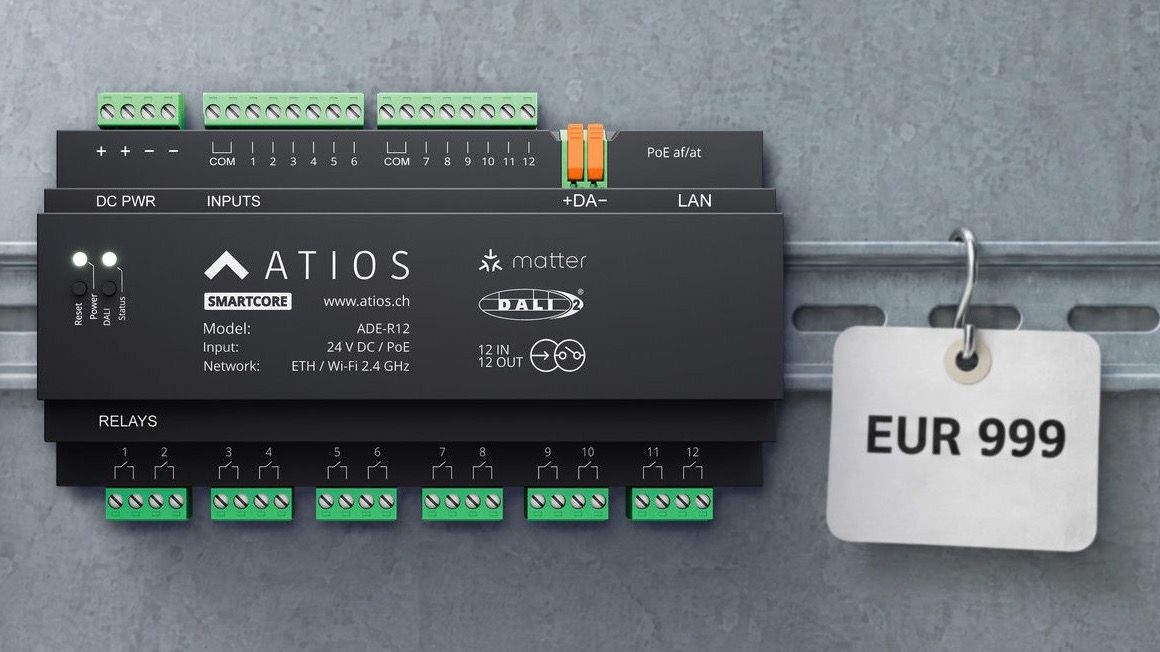
SmartCore: what you get for EUR 999
Matter, 12 relays, 12 inputs and a DALI-2 master in one device. No subscription, free updates.
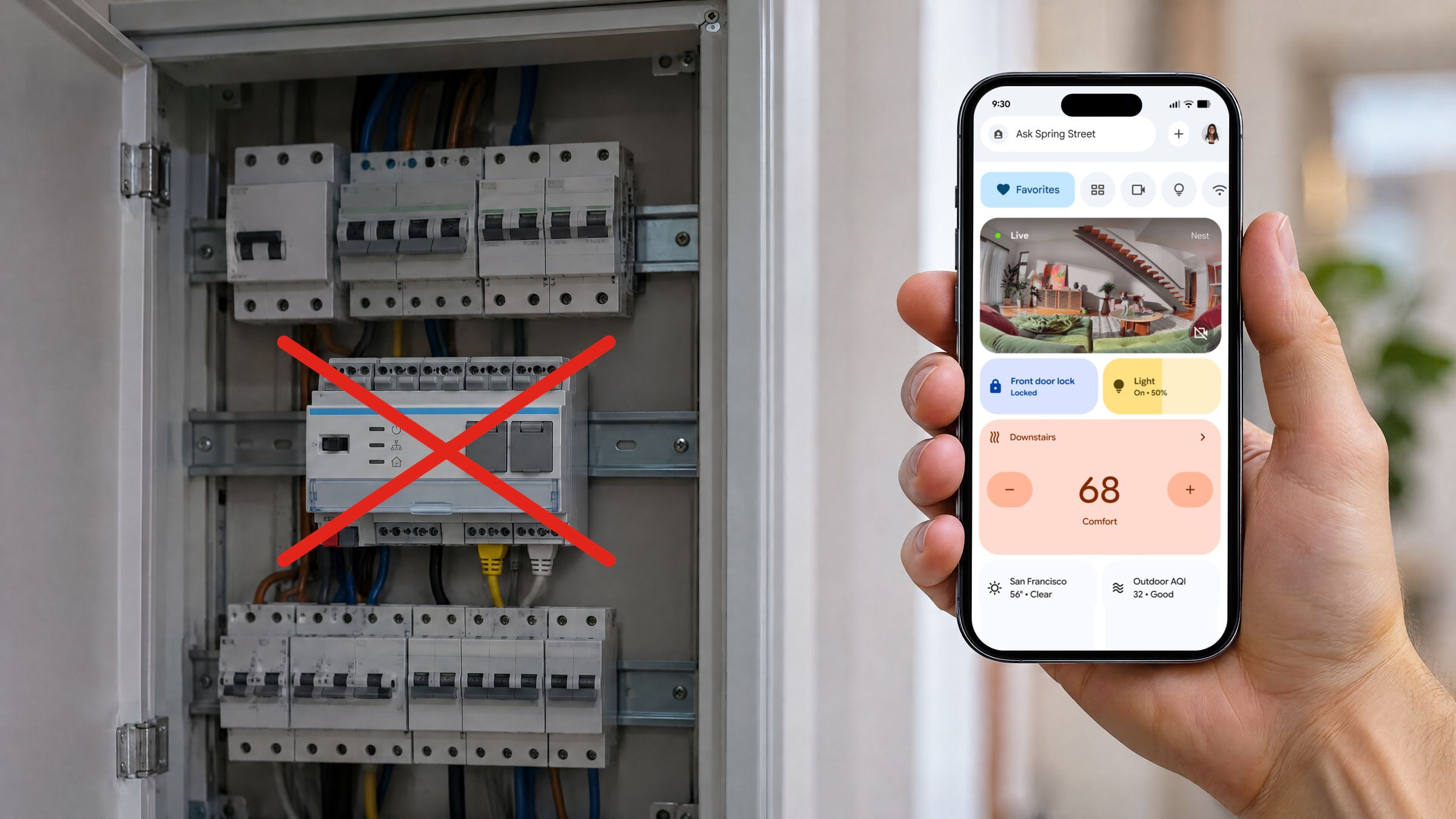
From Domovea to Matter with the Atios KNX Bridge: transfer your configuration in minutes
Your Domovea backup already contains every light, blind, room and KNX group address. An AI assistant like Claude or ChatGPT turns it into a ready-to-import configuration for the Atios KNX Bridge, and your KNX home shows up in Apple Home, Google Home and every other Matter app.
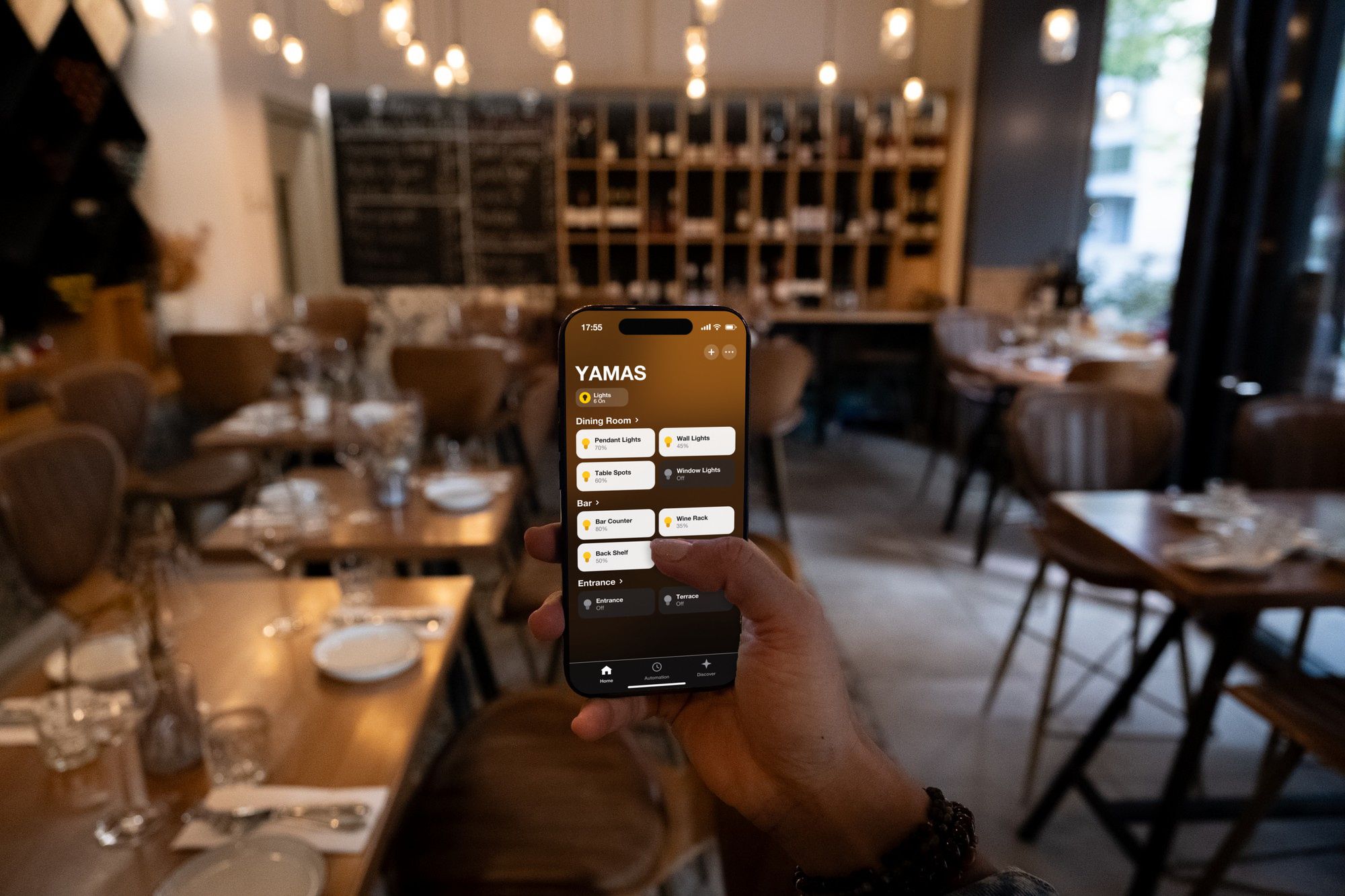
What do you do when your light control outlives its support?
When the display of his lighting control broke, the only offer was a 7,000-franc screen with no guarantee. Petros from YAMAS ran into the biggest problem of closed systems - but was able to fix it all by himself.