 Christina
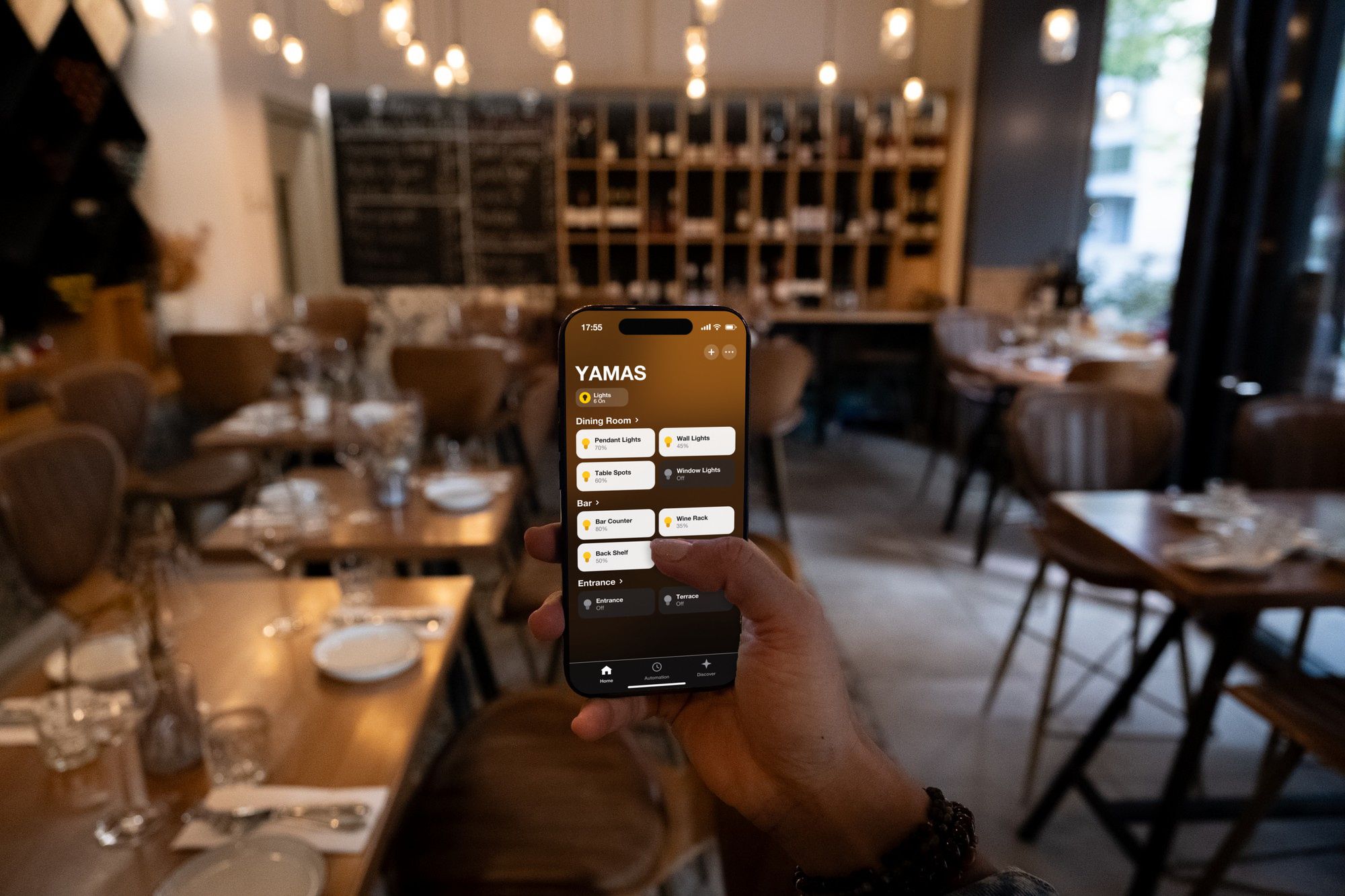
When the display of the lighting control at YAMAS broke during a test, Petros Kouvatsis expected a bill of a few hundred francs at most. "I'm thinking, tell me 100, 200, maybe 1000," he says. Instead, the manufacturer told him they no longer had the old monitor. The only company he found, in Germany, wanted 7,000 francs to replace it with a new Windows system, and they couldn't even promise that it would work, because nobody had a backup of the software.
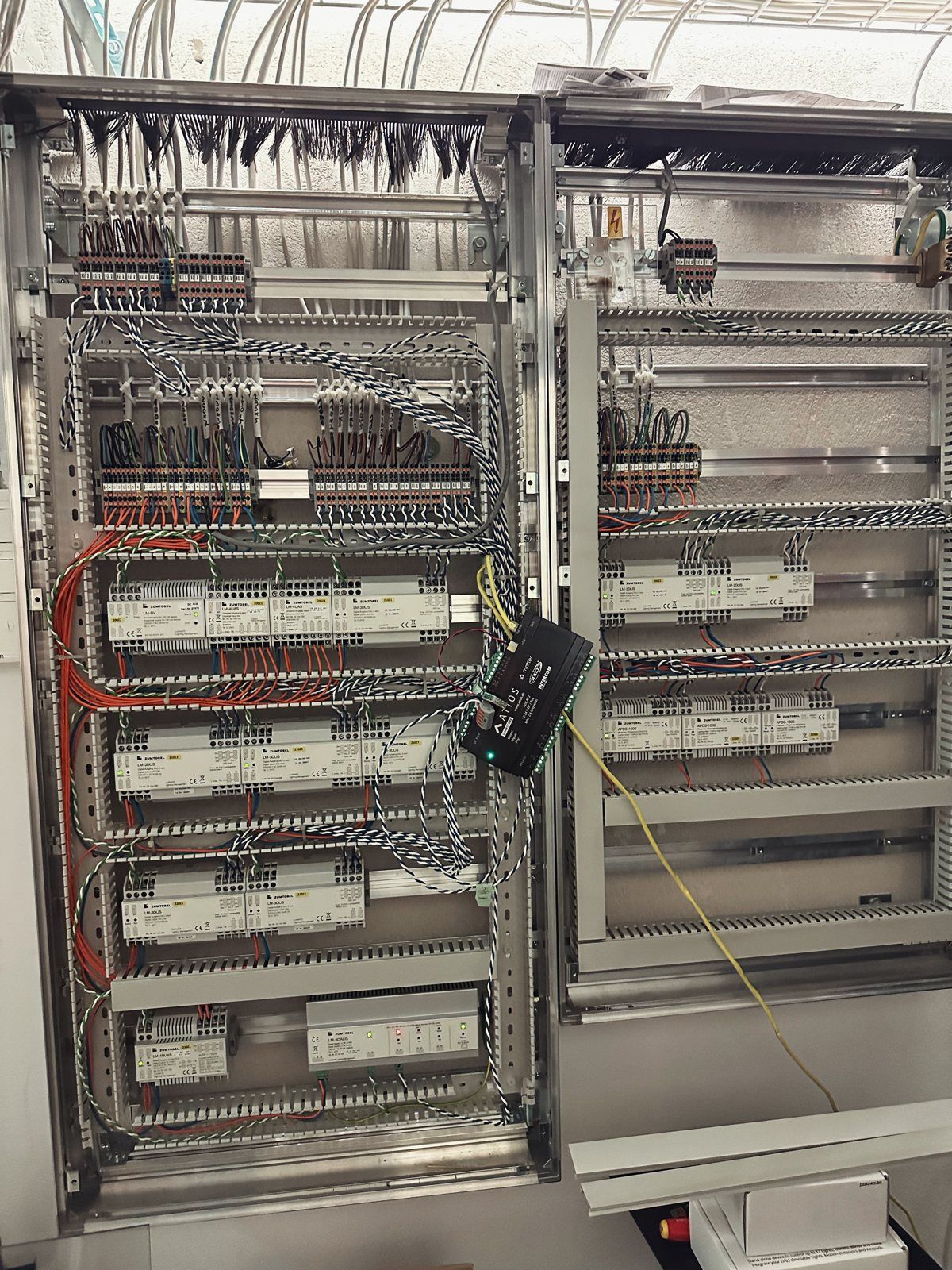 "It's a closed system," Petros says about his old lighting control. "It has a Windows machine inside the display." All he wanted was to switch his lights with a tablet, and he was sure there had to be a simpler way: "I really believed there must be something you can adapt." So he started searching online and found the SmartCore, which controls DALI lights directly. He came by our office, watched how it works and then set up the rest himself, it was just "copy-paste with my eyes", as he calls it. His old system filled a whole control cabinet, and in the end two SmartCores were enough to replace it.
 That he sorted it out himself fits Petros. "I'm a technical guy, give me bits and bytes," he says. He grew up with wine in Goumenissa in northern Greece, has imported Greek wine to Switzerland since 1999, and has run YAMAS, his restaurant and wine bar at Lagerstrasse 48 in Zürich, since 2015. In his own words, he likes "to combine wine, technology and life".
This isn't an isolated case. Petros ran into the main weakness of closed systems: one manufacturer supplies the devices, the software and the support. That has real advantages: everything is tested together, and there is one contact when something goes wrong. But it only works as long as the manufacturer still supports that generation. After that, the owner pays whatever the manufacturer or a specialist asks or replaces the whole system.
Open standards such as KNX and DALI work differently. Many manufacturers build devices to the same standard, so a button or a controller can be replaced with a product from another maker. In KNX, every installation is configured with the same manufacturer-independent software, ETS, and saved in a project file that any KNX installer can open, as long as the owner has a copy. Open standards have downsides too. Planning and setup often take more work, because devices from different manufacturers have to work together, and someone has to take responsibility for the whole installation. Newer standards like Matter don't cover every device type yet: wind and hail sensors, for example, can't be shared through Matter today. We still think open standards are the way to go, and that's why we build our devices for KNX, DALI and Matter. That way, you don't have to put all your eggs in one basket.
Continue reading
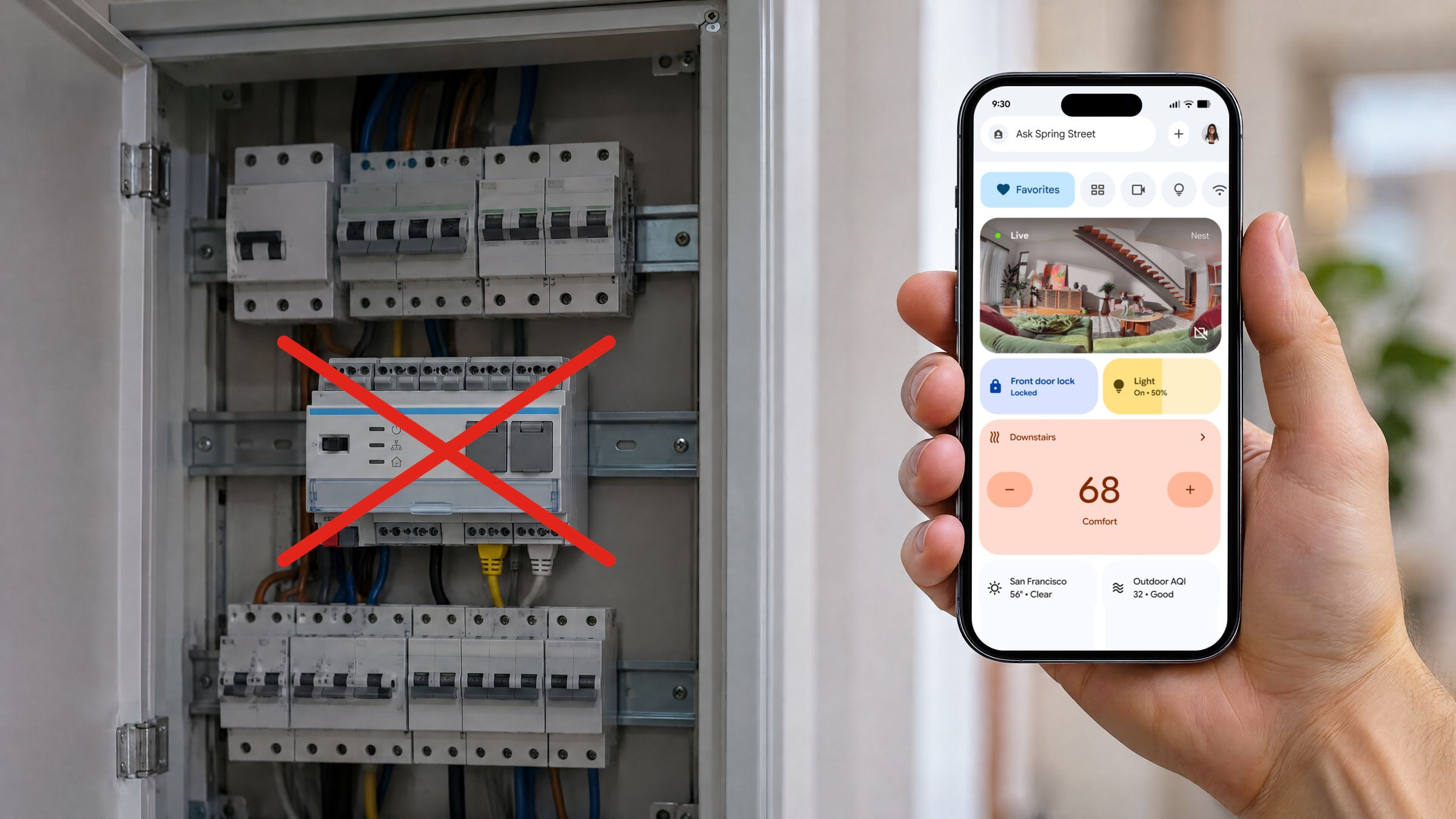
From Domovea to Matter with AI: transfer your entire configuration in minutes
Your Domovea backup already contains every light, blind, room and KNX group address. An AI assistant like Claude or ChatGPT turns it into a ready-to-import configuration, and your KNX home shows up in Apple Home, Google Home and every other Matter app.
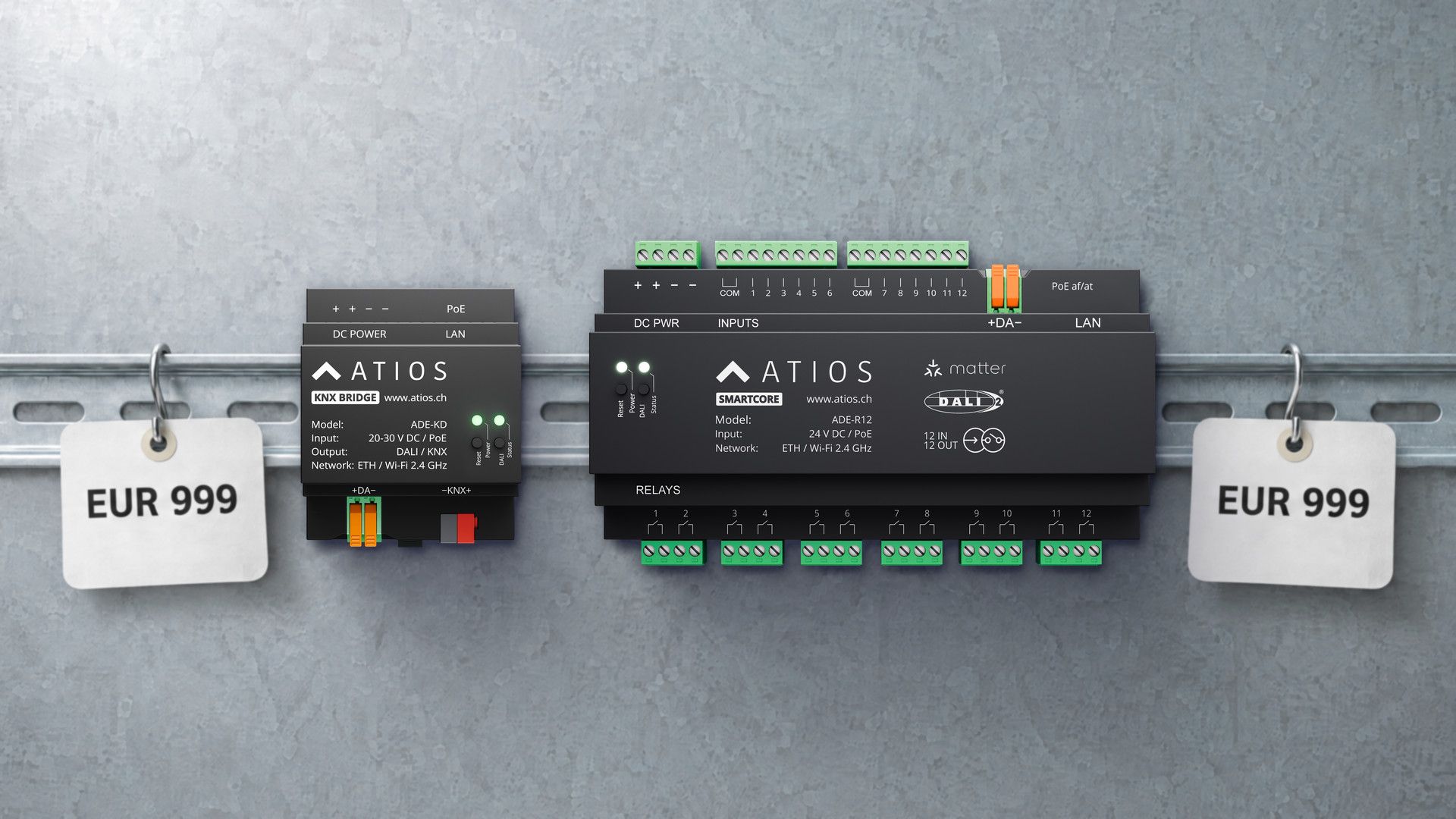
Why the KNX Bridge and the SmartCore are worth EUR 999
Continuous software development, new functions and better margins for installers and wholesalers.
How to Make Your Home Feel Expensive (Without Spending a Fortune)
The two things you feel first when you walk in are light and temperature, and neither one needs a big budget.