On this page
If you work with KNX, you have probably heard the question:
Is Matter going to replace KNX?
It is a reasonable question. Matter is suddenly everywhere: Apple Home, Google Home, Alexa, SmartThings, Home Assistant and an ever-growing number of connected devices.
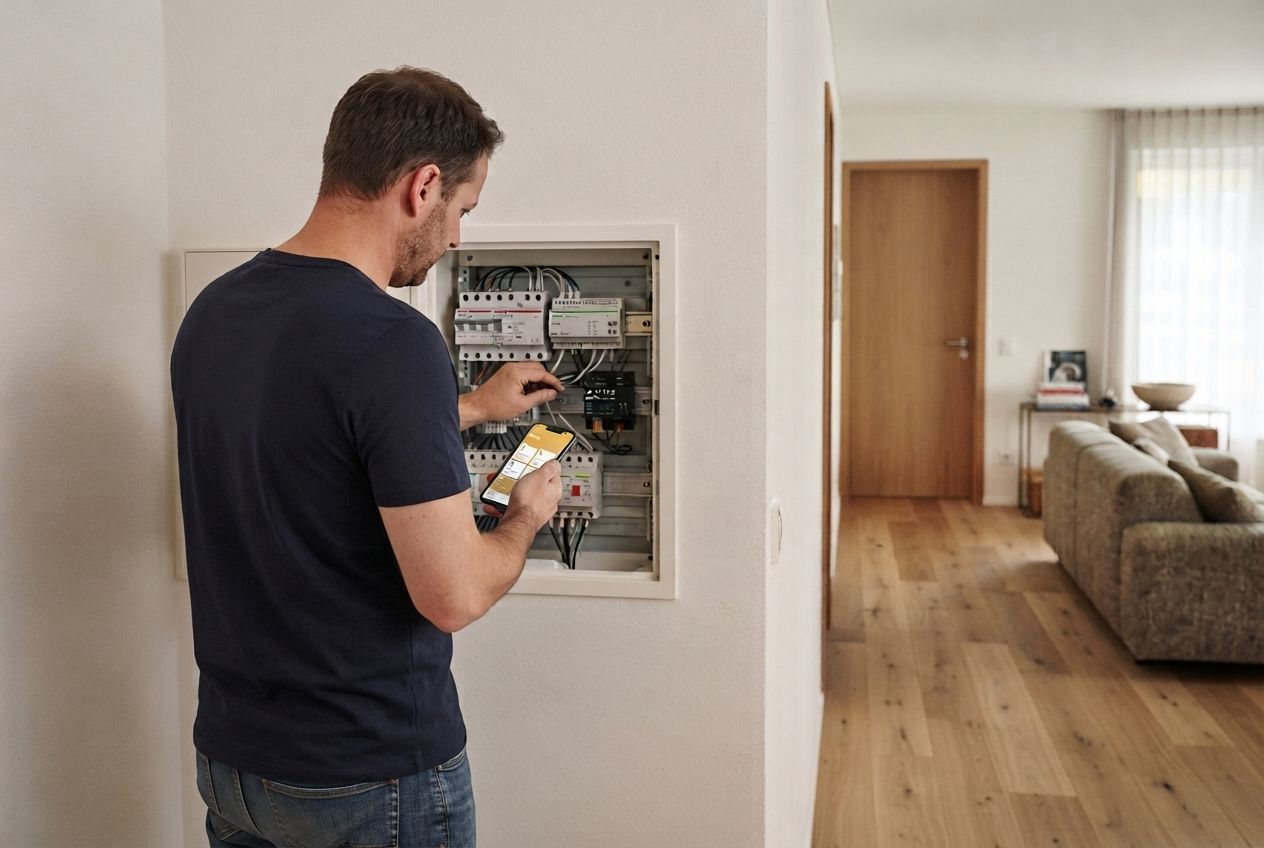
But there is a better way to look at it. Matter isn’t replacing the building. It is changing how people interact with it. Think about what happens after you finish a KNX installation. You have created a sophisticated, reliable system controlling lights, blinds, heating and other functions. But the homeowner doesn’t think about KNX.
They think:
Turn off the lights.
Close the blinds.
Siri, I’m going to bed.
They want to do it from the app they already use. Or simply by saying it out loud. And this is where Matter becomes interesting.
Keep the infrastructure. Upgrade the experience.
KNX is a professional building-automation system. Matter is an interoperability standard designed to connect smart-home devices and ecosystems. They solve different problems. So the question doesn’t have to be:
KNX or Matter?
Instead, they work together: «KNX + Matter».
A Matter bridge can connect a professional installation to the smart-home platforms customers already know and use. The building remains built around technology the installer trusts. The customer gets the interface they expect.
This distinction is becoming increasingly important as smart-home expectations move into professional building projects. Customers don’t necessarily care which protocol controls their lights. They care that the lights work. And they increasingly expect the same simplicity at home that they get from every other connected product in their lives.
The installed base is the opportunity
This isn’t only about new buildings. There are already millions of professionally installed building-automation systems in homes, offices, hotels and other buildings. Many of them work perfectly well. So what happens when the owner of an existing KNX installation wants to use Apple Home? Or Google Home? Or another Matter-compatible platform?
The obvious answer doesn’t have to be replacing the installation. Why replace infrastructure that already works when you can connect it? This is where gateways and bridges become particularly interesting.
They create a layer between the professional automation system and the smart-home ecosystem, allowing the existing installation to evolve without starting from scratch.
For installers, that creates a completely different kind of opportunity. Instead of replacing a system, you can upgrade its user experience.
What does this mean for installers?
Matter doesn’t make professional installers less important. If anything, the opposite is true.
Someone still needs to design the electrical infrastructure, select the right components, install the system, configure it and make sure everything works together. But the definition of a successful installation is changing.
It is no longer enough to ask:
Does the system work?
Increasingly, the question is:
Does the system work the way the customer expects?
That means understanding not only the building-automation technology, but also the ecosystems customers want to use. And that is where interoperability becomes valuable.
From professional infrastructure to everyday experience
Atios is working at this intersection. The idea behind our products such as the KNX Bridge is simple: connect professional building technology with the smart-home ecosystems people already use.
The KNX Bridge connects KNX installations to Matter, creating a path between an established professional automation system and today’s smart-home interfaces.
The important part isn’t the KNX Bridge itself. It is what it enables. An installer can continue working with professional technology. A planner can continue specifying the infrastructure they know. And the end user can get a familiar interface on top. Everyone gets to stay in their own world, while the worlds finally talk to each other.
The building doesn’t care about your protocol
For decades, the smart-building industry has been asking: Which protocol? Which system? Which ecosystem? But users don’t ask those questions. They ask:
Why can’t I control this from my phone?
And that gap is getting harder to ignore. The technology inside a building can be incredibly sophisticated. But if the person using it needs to learn how the system works before they can use it, something has gone wrong. Matter is interesting because it flips the perspective. It doesn’t ask us to replace everything that came before. It asks us to make all that technology accessible.
That’s a powerful shift.
KNX doesn’t need to disappear. Professional building automation doesn’t need to become «consumer tech». But the days when the user had to adapt to the building are coming to an end. The building needs to adapt to the user.
And that may be the real promise of Matter.
Your KNX installation isn’t becoming obsolete.
The user interface is changing.
Continue reading

How to Make Your Home Feel Expensive (Without Spending a Fortune)
The two things you feel first when you walk in are light and temperature, and neither one needs a big budget.
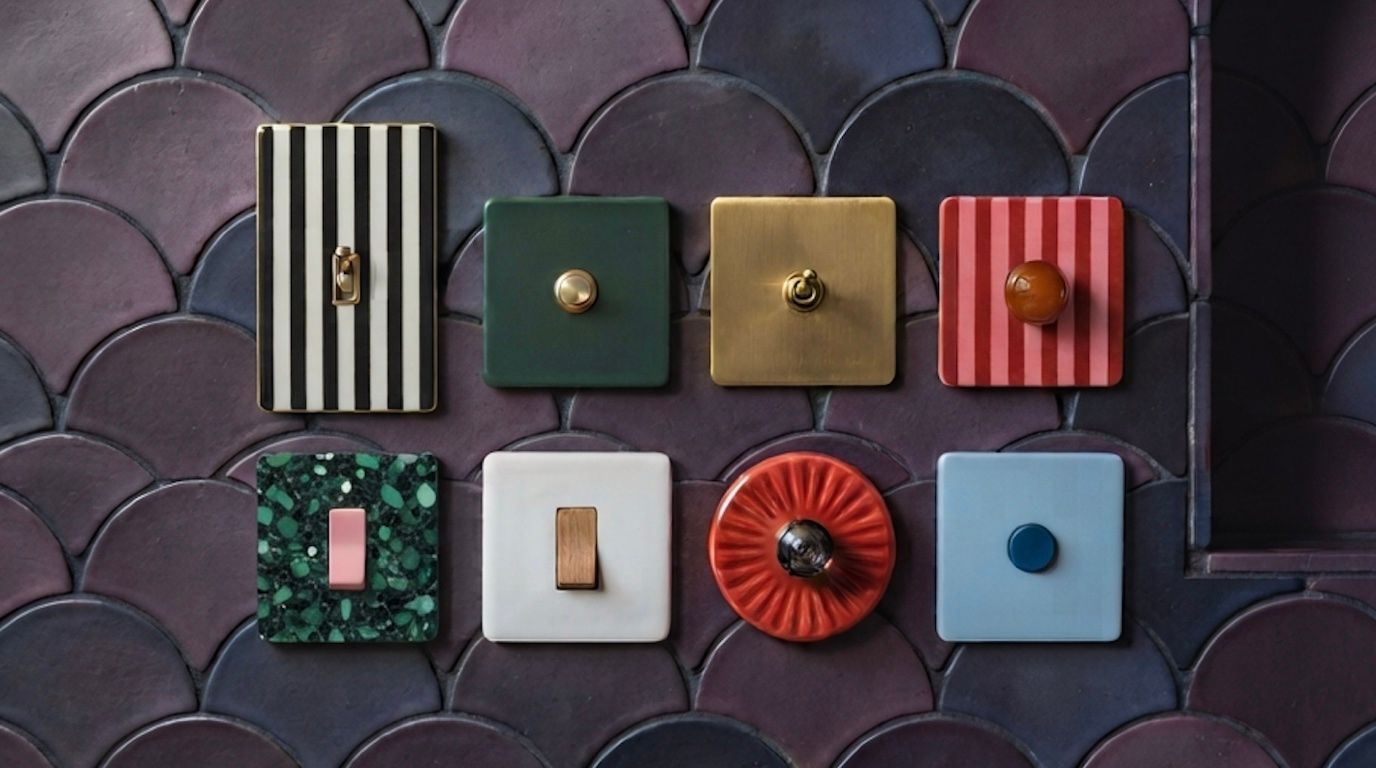
Your design switch deserves to be smart
Keep the beautiful light switch you chose, and make it work with Apple Home, Google Home and the rest of your smart home.
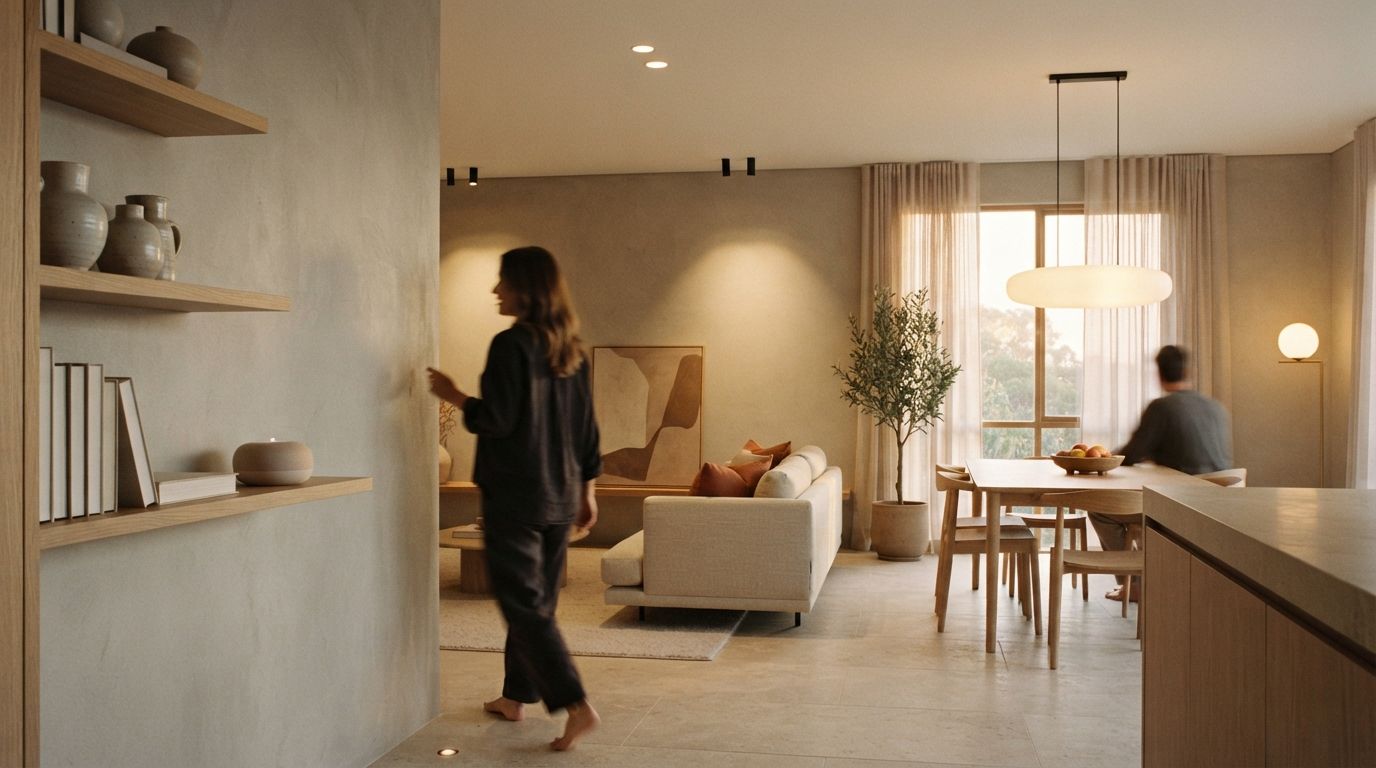
DALI doesn’t speak Siri. We fixed that.
Professional DALI lighting and decorative luminaires, in the same app, the same scene and the same voice command.