 Saara
Saara
On this page
Ask most Airbnb hosts what «smart home» means for their property, and they’ll tell you about the lock. And they’re usually right to: the lock is the one piece of smart tech many hosts have already installed. Guests get a code, code changes for the next booking, done.
The lock solves one problem: who gets in. It says nothing about what happens once they’re inside, whether the AC is blasting on an empty unit, whether a leak is ruining a ceiling below, or whether the host finds out about any of it before a guest does.
The numbers back this up
Across the industry, smart locks are the clear leader in adoption: Lodgify’s 2024 Vacation Rental Industry Report found 68 percent of hosts already using one. But that’s where the story usually ends.
According to Hostfully’s 2026 tech stack study, one of the largest ever published on the industry, adoption of smart home and IoT systems, the technology that actually manages climate, lighting, energy and safety inside the property, sits at just 32 to 37 percent across every portfolio size, from single-property hosts to operators running over a hundred units.
Put simply: the lock is the easy first step almost everyone takes. Running the rest of the property the same way is still the exception, not the rule.
Nobody’s watching, and nobody treats it like their own home
Peak season makes this worse, not better. It’s exactly when hosts are least likely to set foot in the property, when the money is easy and a cleaning company handles the turnover. Nobody’s checking the water heater. Nobody’s testing the smoke detector. The host finds out about problems the way they always have: a guest complaint, or damage bad enough that the cleaner mentions it in passing.
And there’s no need for a study to prove what every host already knows: a guest doesn’t run a rental the way they’d run their own house. The AC stays on because it’s not their bill. Nobody’s checking the stove was really off, because if something goes wrong, it’s the host’s problem, not theirs.
That’s not guests being careless on purpose, it’s just what happens when nobody has skin in the game, which is exactly why leaving a property’s safety and efficiency up to guest habits, or to nobody at all between cleanings, is a bet no host should be making.
Two ways this goes wrong
Most hosts stop right after the lock, and the inside of the property runs entirely unmanaged. The ones who do go further usually end up somewhere just as unmanaged, from a different direction: a thermostat here, a noise sensor there, a camera at the entrance, each with its own app and login, none of them talking to each other or to the booking calendar that’s supposed to tie it all together.
Either way, the result is a property that isn’t actually managed, just watched over piecemeal, with real gaps in between.
What a property actually needs, running quietly in the background
- Climate that manages itself. No more AC blasting at full power for eight hours while the guests are off at the beach. Pre-cool before check-in, cut back automatically when nobody’s home, cap the temperature so nobody cranks the bill up on their way to the airport.
- Lighting that sets the mood without a second thought. An arrival scene when the door opens, everything off and idle between bookings.
- Energy that doesn’t leak money. High-draw appliances on smart control, vacancy detection so an empty unit isn’t quietly running the meter up.
- Leak sensors that catch the problem before it’s a claim. A shutoff valve that closes itself the moment water shows up where it shouldn’t.
- Smoke and CO detection that actually reaches you. Not a beeping unit in an empty apartment, a remote alert, in real time.
- One dashboard, not five. Everything tied together and synced to the booking calendar, so schedules follow check-in and check-out automatically.
The lock, the noise monitor, the entrance camera: those are real needs too, and they can live right alongside all of this in the same interface. But this list, the climate, the lighting, the energy, the leak and fire safety, and the system that ties it into one view, is the part that has to be rock solid on its own.
This is where Atios comes in
This is our world. Not a side feature, the actual core of what we engineer every day. While the industry has largely solved the lock and stopped there, we build the backbone that makes a property genuinely intelligent, engineered to run flawlessly with nobody watching, because for an Airbnb host, nobody watching is the default, not the exception.
And because we’re built to integrate rather than to lock hosts into a closed box, the lock, the noise monitor, the camera a host already trusts slot right into the same experience we run everything else through. One system. One view. Nothing left up to five different apps hoping they all decide to work on the same night.
For an Airbnb owner scaling past the point where checking in personally is even possible, that’s the difference between a portfolio that runs itself and one that’s one missed notification away from a very expensive surprise. We built Atios to be the reason it’s the former.
Want to know how much it costs to manage your Airbnb this way?
For less than the price of a night or two, you can stop wondering what’s happening inside your property and start knowing. Get in touch and we’ll show you what it looks like for your unit.
Continue reading
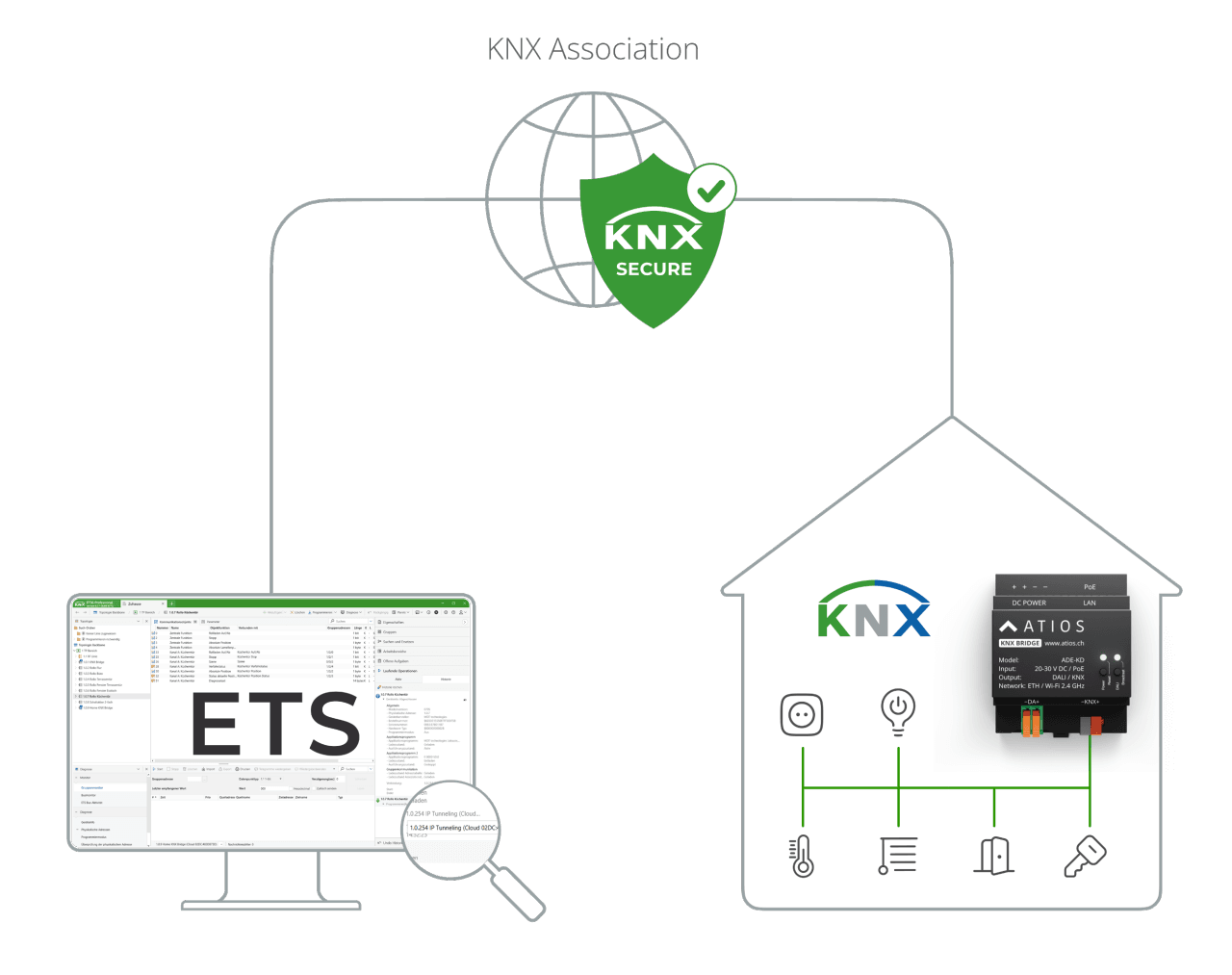
KNX Secure: What it is and how the Atios KNX Bridge supports it
Two security mechanisms, one bridge that supports both, including units already installed.
Why Are We Passionate About Matter?
An engineering team’s honest answer.
You Designed the Customer Journey. Don’t Forget the Staff Journey.
A retail automation system is only as good as the experience of the people who use it every day.