'%3e%3cpath%20fill='white'%20d='M12.2178%205.26343L15.3569%2012.7053L17.4812%2010.5404L12.2178%205.26343Z'%3e%3c/path%3e%3cpath%20fill='white'%20d='M5.27696%2022.7721L22.7721%205.27696L17.4951%200L0%2017.4951L5.27696%2022.7721Z'%3e%3c/path%3e%3cpath%20fill='white'%20d='M12.2178%205.27696L29.7129%2022.7721L34.9899%2017.4951L17.4947%200L12.2178%205.27696Z'%3e%3c/path%3e%3cpath%20fill='white'%20d='M54.9618%206.25116C55.4353%204.70867%2055.8413%203.38266%2056.2201%202.05666H56.3419C56.7478%203.40972%2057.1267%204.76279%2057.695%206.31881L60.0087%2013.8013H52.5533L54.9618%206.25116ZM54.3529%200.270613L47.1816%2022.4068H49.766L51.8227%2015.9662H60.7258L62.7825%2022.4068H65.4886L58.2768%200.270613H54.3529ZM79.2764%2022.4474H81.8066V2.55729H87.6789V0.270613H73.4041V2.5167H79.3034L79.2764%2022.4474ZM100.181%2022.4474H102.711V0.270613H100.181V22.4474ZM119.408%2011.271C119.408%204.38393%20121.749%202.27315%20125.348%202.27315C128.947%202.27315%20131.41%204.57336%20131.41%2011.5011C131.41%2018.4288%20129.11%2020.4989%20125.443%2020.4989C121.776%2020.4989%20119.408%2018.1852%20119.408%2011.271ZM133.994%2011.271C133.994%203.15264%20130.774%200%20125.524%200C120.274%200%20116.702%203.31501%20116.702%2011.5011C116.702%2019.6871%20119.895%2022.7721%20125.172%2022.7721C130.449%2022.7721%20133.94%2019.4571%20133.94%2011.271H133.994ZM152.937%2020.4989C150.862%2020.5138%20148.851%2019.7732%20147.281%2018.4152L145.793%2020.4313C147.733%2022.0331%20150.193%2022.8661%20152.707%2022.7721C157.443%2022.7721%20160.095%2019.9983%20160.095%2016.6427C160.095%209.87738%20149.541%2010.8922%20149.541%205.81818C149.541%203.80211%20151.084%202.3408%20153.681%202.3408C155.259%202.31464%20156.794%202.85197%20158.011%203.85624L159.554%201.89429C157.923%200.632155%20155.905%20-0.0274889%20153.844%200.0270606C149.866%200.0270606%20146.984%202.61141%20146.984%205.96702C146.984%2012.9488%20157.538%2011.8123%20157.538%2016.7915C157.443%2018.8482%20155.833%2020.4989%20152.829%2020.4989H152.937Z'%3e%3c/path%3e%3c/g%3e%3cdefs%3e%3cclipPath%20id='clip0_1060_39'%3e%3crect%20fill='white'%20height='22.7721'%20width='160'%3e%3c/rect%3e%3c/clipPath%3e%3c/defs%3e%3c/svg%3e)
 Saara
Saara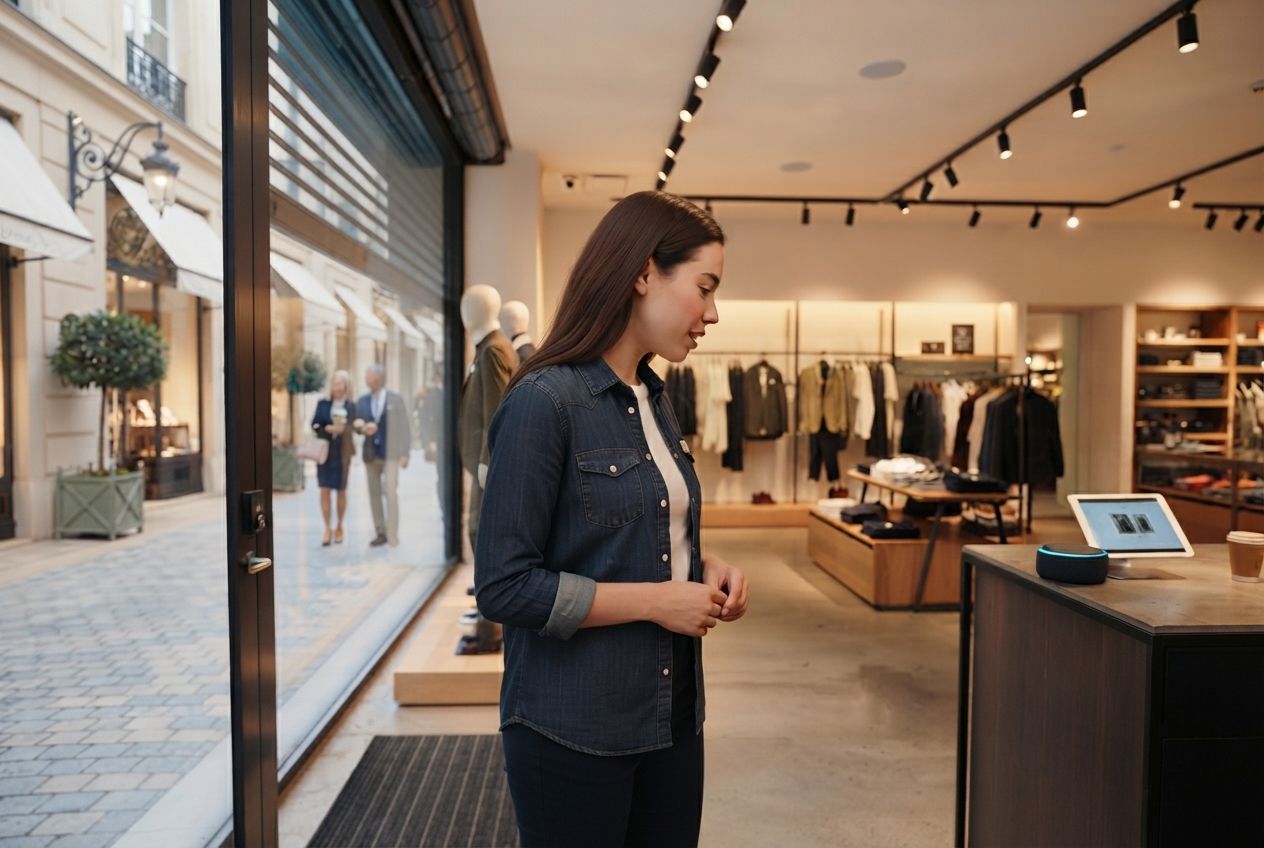
On this page
Retail design is a surprisingly sophisticated business.
A successful shop is not simply a room filled with products. Every detail is considered: how customers move through the space, where they stop, what they see first and which products catch their attention. Retail planners use psychology, customer behaviour, heat maps and traffic patterns to understand how people interact with the store and how the environment can encourage them to stay longer and, ultimately, buy more.
Lighting plays an important role in this. Colour rendering, beam angles, contrast and shadows can completely change how a product looks. A carefully positioned spotlight can make a material feel more luxurious, make a colour more attractive or draw attention to a particular collection.
Then there is everything that happens behind the scenes. Doors need to open. Security systems need to be armed and disarmed. Metal curtains need to move. Displays need to be opened. Lights need to be switched on and off. Heating and cooling need to respond to the changing conditions in the store.
All of this can be carefully planned.
But there is one group of people who are often not part of that planning process.
The people who actually work in the shop.
The gap between designing a shop and using it
The architect, lighting designer and system integrator may spend weeks or months creating the perfect retail environment. They understand the logic behind every system and know exactly how everything is supposed to work.
The shop employee usually has a different job.
They arrive in the morning and need to get the store ready. They have customers to help, deliveries to receive and a hundred other things to think about. They should not need to understand the technology behind the building in order to operate it.
This creates an important question for anyone planning a retail automation system:
What happens when the people who designed the system are no longer there?
Does the lighting still work as intended? Can a new employee understand the controls without extensive training? Can someone easily create the right atmosphere for the evening? And what happens when several different systems need to be operated at the same time?
A system can be technically excellent and still be frustrating to use.
That is where the difference between automation and good automation becomes important.
Smart does not have to mean complicated
There is a strange contradiction in building automation.
We call systems «smart» because they can do increasingly complicated things. They can communicate with different devices, react to conditions, follow schedules and combine multiple functions.
Yet sometimes the result is an interface that is more complicated than the problem it was supposed to solve.
A shop employee should not have to think about whether a command is going through DALI, KNX, a relay or another protocol. They should not have to open several applications just to prepare the store for the day.
Think about your home.
You walk into a room and turn on the light. You press a button. You close the blinds. You might even tell your voice assistant what you want.
You don’t need to know how any of it works.
That simplicity is not a sign that the technology is unsophisticated. Quite the opposite. It means that the complexity has been handled somewhere else.
Why shouldn’t a retail space work in the same way?
Making the technology disappear
This is one of the ideas behind Atios.
Atios brings different parts of a space together so that they can be operated as one environment. Lighting can work alongside other building functions such as doors, locks, metal curtains and security systems, rather than leaving staff to deal with each system separately.
But integration is only half of the story. The other half is the experience of the person using it.
The existing switches and buttons in a retail space can remain familiar while the intelligence happens in the background. And where it makes sense, voice control can offer another simple way of interacting with the space.
The technology does not need to announce itself.
It can simply make the shop easier to operate.
Design for the 7:30 AM employee
Perhaps the best test of a retail automation system is not the day the new store opens.
It is an ordinary Tuesday morning six months later.
An employee arrives at 7:30. The store needs to come to life. The lights need to be on, the metal curtain needs to be open, the doors and security need to be ready. And the person doing all of this should be able to operate the space as naturally as they would operate their own home.
They should not have to think about the technology. They should simply know what to do.
This is where good automation makes a difference. It does not ask people to change the way they behave just because the building has become smarter. Instead, it adapts the technology to the way people already interact with a space.
And perhaps that is a better definition of smart. Not how many systems you can connect. Not how many functions you can automate. But how little effort it takes for a person to make the space do what they want.
And perhaps that is the question worth asking before choosing any automation system:
Are you designing it for the people who specify it, or for the people who will actually use it?
Atios builds the bridge between the world’s most proven building standards (KNX and DALI) and the ecosystems you already live in: Apple Home and Google Home, through Matter. Fully local, no cloud dependency, no monthly fees.
Continue reading

The Home Office That Feels Like a Porsche Cockpit
Lighting, climate, one gesture.
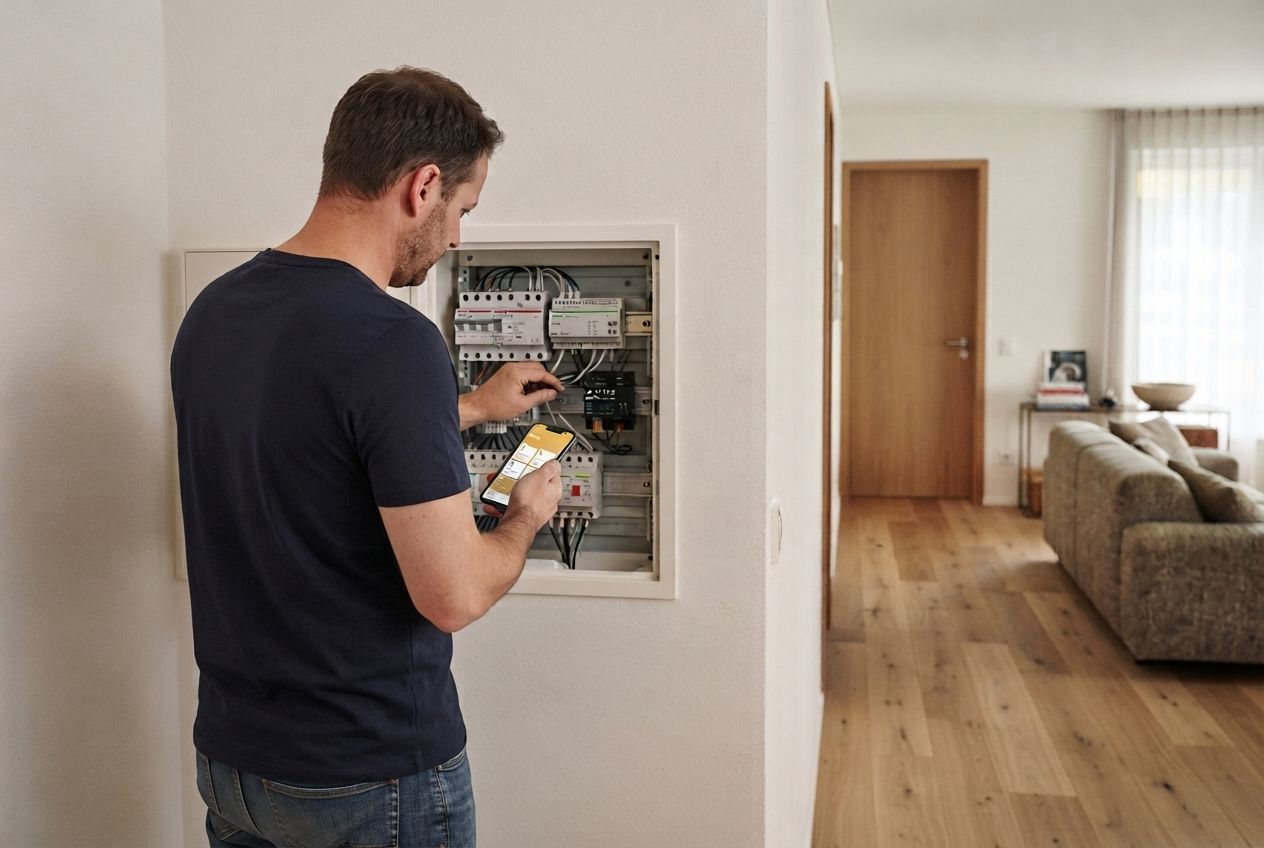
What Matter really means for the electrical industry
Your KNX installation isn’t becoming obsolete. The user interface is changing.
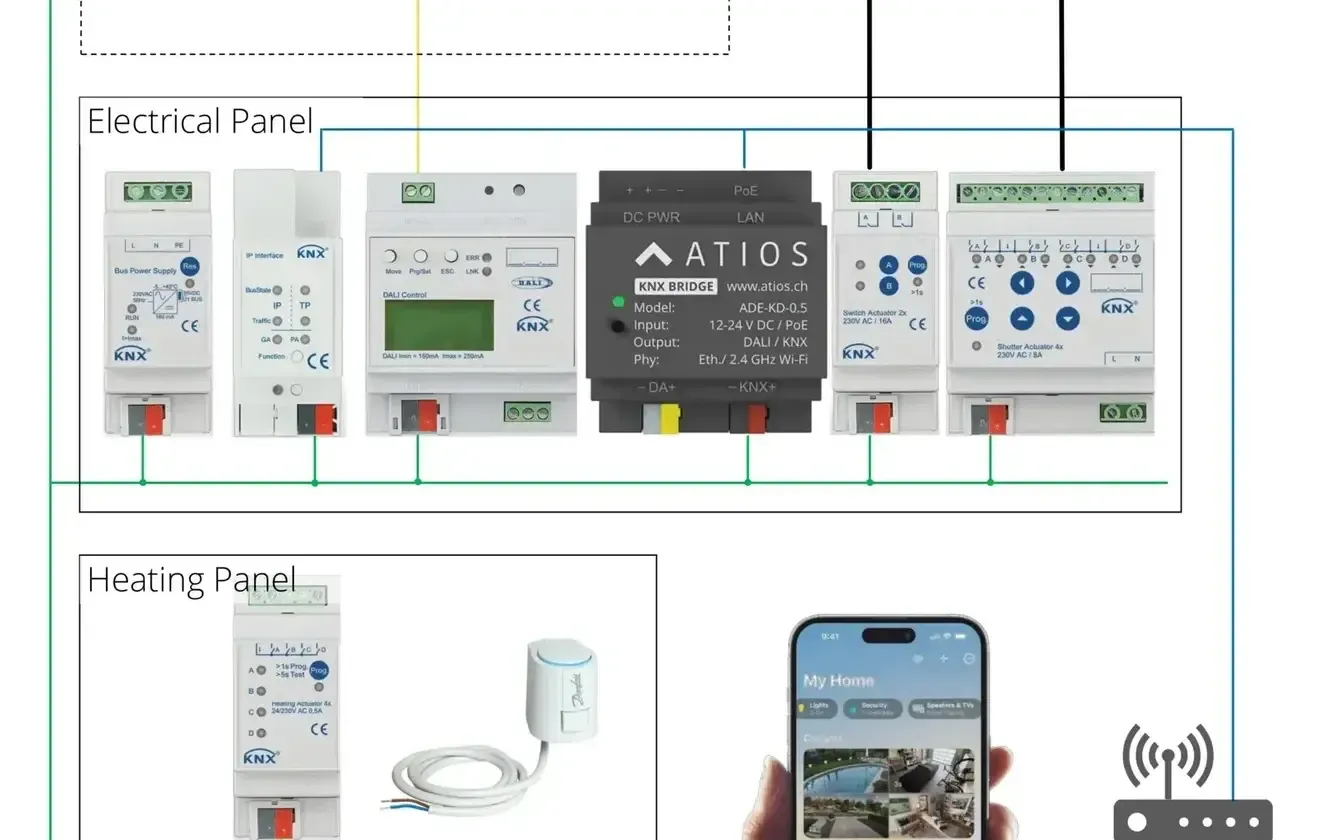
Planning a KNX Home: A Practical Beginner's Guide
Build a rock-solid KNX home with modern app control — Apple Home, Google Home and Matter via Atios KNX Bridge.